
There are moments when everything feels like too much. Not in a dramatic way… just a quiet overwhelm that sits in your chest.
I’ve felt it before, when my thoughts are racing, when I can’t quite settle, when something feels off, and I don’t even know why. And in those moments, I’ve learned something simple…something I often forget and then find again.
My breath.
Not forced. Not perfect.
Just there… waiting for me to return to it.
Breathing is something we do every day, often without thinking. But it can also be a powerful tool for finding balance and peace.
Are you feeling stressed, overwhelmed, or out of balance? Discover the power of conscious breathing.
Yoga and meditation are two practices where the breath becomes the anchor. Through slow, mindful breathing, paired with gentle movement or stillness, we begin to create a sense of calm and harmony within. By bringing our attention to the breath and the present moment, we can quiet the mind, relax the body, and cultivate a deeper sense of inner peace.
Breathing consciously offers a pathway to stillness and tranquillity. If you would like to discover simple techniques, benefits, and gentle ways to incorporate breath into your daily life, please read on.
Take a deep breath, and begin your journey toward a more peaceful, balanced you.
Understanding the Concept of Peace and Balance
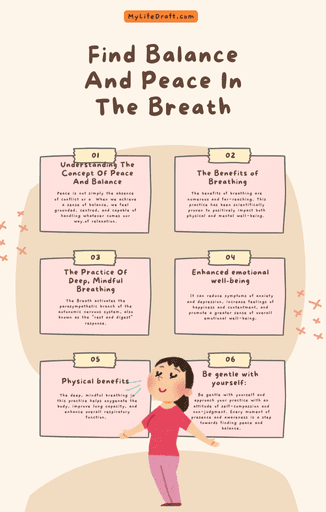
Peace and balance can feel hard to reach in today’s fast-paced and demanding world.
It’s easy to get caught up in the chaos of daily life, constantly juggling responsibilities and searching for a moment of stillness.
But what does it really mean to find peace and balance?
Peace is not simply the absence of conflict or a moment of relaxation.
It’s a deeper inner calm… one that allows us to move through life’s challenges with a sense of ease and steadiness.
Balance, on the other hand, is the gentle blending of the different parts of our lives… our work, our relationships, our health, and our personal growth.
I notice this most on the days when everything feels rushed… and I forget to pause.
When we begin to feel that sense of balance, something shifts.
We feel more grounded, more centred, and more able to handle whatever comes our way.
Learn to Breathe
Learning to breathe consciously, especially during yoga or meditation, can be a simple but powerful way to come back to yourself.
It’s not about doing it perfectly.
It’s about noticing your breath… and letting it guide you back when your mind feels busy or your body feels tense.
When I slow my breath, even just a little, I can feel the shift.
My shoulders soften. My thoughts quiet. Things don’t feel quite as overwhelming.
Breathing alongside gentle movement, or even in stillness, creates a sense of calm that builds over time.
It helps you become more aware of yourself… of what you need… and where you might feel out of balance.
It’s a quiet, steady way to support your mind, your body, and your spirit.
The Benefits of Breathing
The benefits of breathing are numerous, and this practice has been shown to support both physical and mental well-being.
Stress reduction:
One of the primary benefits of breathing during yoga and meditation is its ability to reduce stress. When we’re stressed, our bodies go into the “fight or flight” response, releasing stress hormones that can harm our health. Breathing activates the body’s relaxation response, helping lower blood pressure, slow heart rate, and reduce stress hormone levels. This can lead to a greater sense of calm and well-being.
Improved mental clarity:
Breathing yoga meditation focuses the mind on the breath, which helps quiet the mental chatter and bring about mental clarity. Regular practice can improve concentration, enhance cognitive function, and promote greater mental focus. This can particularly benefit those struggling with racing thoughts or difficulty staying present.
Enhanced emotional well-being:
Breathing consciously positively impacts emotional well-being. By cultivating mindfulness and self-awareness, this practice can help you become more attuned to your emotions and better equipped to manage them. It can reduce symptoms of anxiety and depression, increase feelings of happiness and contentment, and promote a greater sense of overall emotional well-being.
Physical benefits:
In addition to its mental and emotional benefits, breathing consciously has numerous physical benefits. The deep, mindful breathing in this practice helps oxygenate the body, improve lung capacity, and enhance overall respiratory function. It can also help improve posture, increase flexibility, and strengthen the muscles. Regular practice can improve physical fitness and a greater sense of vitality.
The Science Behind Breathing in Yoga or Meditation
Breathing might feel simple… even easy to overlook.
But there’s actually something powerful happening in your body when you slow it down.
It’s not just a calming idea.
There’s real science behind it.
When we feel stressed, our body shifts into what’s often called “fight or flight.”
You might notice your heart beating faster, your breath becoming shallow, or a sense of tension building without even realizing it.
I’ve felt this more times than I can count…
that subtle feeling of being on edge, even when nothing obvious is wrong.
But something interesting happens when we begin to slow our breath.
Our body starts to respond.
Our heart rate can ease. Our muscles begin to relax.
And little by little, that sense of urgency softens.
This is because our breath is closely connected to the part of our body that controls these automatic responses.
When we breathe slowly and consciously, we gently signal to the body that it’s safe to relax.
The Practice of Deep, Mindful Breathing
When you begin to slow your breath, your body shifts into a more relaxed state, often called “rest and digest.” You might not notice it right away, but eventually something starts to soften. Your heart rate slows. Your body begins to release tension. And there’s a quiet sense of settling that can come over you.
I’ve felt this in simple moments. Just pausing, taking a deeper breath, and realizing I didn’t have to carry everything all at once. There’s also a deeper connection happening in the body. Your breath supports a system that helps you calm down, reset, and restore balance.
Over time, with regular practice, this can begin to change how you feel day to day. You may notice it becomes easier to focus, to manage your emotions, and to come back to yourself when things feel overwhelming.
It’s a gentle practice…
but one that can have a powerful effect on your mind, your body, and your overall sense of well-being.
How to Practice Breathing with Meditation
Now that you have a sense of how powerful the breath can be, let’s gently explore how to bring it into your daily life. You don’t need to do this perfectly. You’re simply creating a small space to return to yourself.
Find a quiet space
Choose a place where you feel comfortable and won’t be disturbed. It doesn’t have to be perfect… just somewhere that feels calm to you. It might be a quiet corner of your home, your bedroom, or even outside in nature. What matters most is how it feels.
Get comfortable
Sit in a way that feels natural and supported. You can sit on the floor, on a cushion, or in a chair. Let your spine be gently upright, not stiff, and allow your body to soften. You can close your eyes, or simply lower your gaze, whatever feels right for you.
Bring your attention to your breath
Notice your breath as it moves in and out. There’s no need to change it right away, just observe. You might feel it in your chest or in your belly as it rises and falls. Sometimes I like to place a hand there, just to feel that connection. If your mind wanders, that’s okay. Gently bring your attention back to your breath, again and again.
Let your thoughts come and go
Thoughts will come… they always do. Instead of trying to stop them, just notice them and let them pass, like clouds moving through the sky. There’s nothing to fix here. Just noticing is enough.
Start small
You don’t need a long session to feel the benefit. Even a few minutes can make a difference. Start with five or ten minutes and see how it feels. What matters most is consistency, coming back to it a little at a time.
Add gentle movement if it feels right
Sometimes it helps to move a little as you breathe. A stretch, a slow movement, or a simple yoga pose can deepen the connection between your body and your breath. You can explore this gently and see what feels good for you.
Breathing with meditation is a personal practice. There is no right or wrong way to do it. It’s simply about finding what feels right for you and allowing yourself the space to return, again and again.
Tips for Bringing Your Breath into Your Daily Routine
Bringing your breath into your daily routine doesn’t have to be complicated. Breathing with yoga can be simple, gentle, and something you return to in small moments throughout your day. When you begin to incorporate breathing with yoga into your daily routine, you may start to feel calmer, grounded, and more balanced.
Here are a few ways to begin:
Set aside a little time
Choose a time that feels natural for you. It might be in the morning before your day begins, during a quiet moment in the afternoon, or in the evening when things start to slow down. Even a few minutes of breathing with yoga is enough to make a difference when practiced consistently.
Start small
You don’t need long sessions to experience the benefits of breathing with yoga. Begin with just a few minutes a day and allow it to feel easy. Over time, as breathing with yoga becomes part of your daily routine, it will grow naturally.
Create gentle reminders
It’s easy to forget, especially on busy days. Placing small reminders in your environment can help you return to your breath. This could be a note on your mirror, a quiet pause during your day, or a simple moment of breathing with yoga before reaching for your phone.
Share the practice
If it feels right, you might share breathing with yoga with someone close to you. Practicing together can feel supportive and help you stay consistent in your daily routine.
Be gentle with yourself
Breathing with yoga is a practice, and some days will feel easier than others. Your mind may feel busy or your body restless, and that’s okay. What matters is returning to your breath with kindness. Over time, this gentle approach helps create lasting peace and balance in your daily routine.
Breathing Yoga Meditation Techniques
If you’re new to breathing yoga meditation, here are a few gentle techniques to help you get started. You don’t need to try them all at once… just begin with what feels right for you.
Counted breath
This is a simple way to bring awareness to your breath.
As you breathe in, count slowly to four. Hold for four. Then exhale for four, and pause again for four.
There’s no need to rush.
Let the rhythm feel steady and natural.
As you become more comfortable, you can slowly increase the count to six or eight.
Body scan
This technique brings your attention into your body.
Starting at the top of your head, slowly move your awareness down… noticing each area as you go. If you feel tension anywhere, gently breathe into that space and allow it to soften.
This can help you feel more connected to your body and more at ease.
Loving-kindness meditation
This practice gently shifts your focus toward compassion.
Bring to mind someone you love, someone you feel neutral toward, and someone you may be struggling with.
As you think of each person, quietly offer them kind wishes.
You might say,
“May you be happy…
May you be healthy…
May you be safe…
May you live with ease.”
This practice can open your heart and create a deeper sense of connection.
Advanced Breathing Techniques
If you’ve been practicing breathing with yoga or meditation for a while, you might feel ready to explore a little more.
There’s no need to rush into anything. Just follow what feels natural and supportive for you.
Alternate nostril breathing
This technique helps bring a sense of balance to your breath.
Using your thumb and ring finger, gently close one nostril at a time as you breathe. You can begin by closing your right nostril and breathing in through your left. Then switch, closing your left nostril and breathing out through your right.
Continue slowly, allowing your breath to move in a steady, even rhythm.
Mantra meditation
This practice brings together your breath and your thoughts.
As you breathe, you can quietly repeat a word or phrase that feels meaningful to you. It might be something simple like “peace,” “calm,” or “I am enough.”
Let the words move gently with your breath…
inhaling one part, exhaling the other.
Walking meditation
This is a beautiful way to bring your breath into movement.
As you walk slowly, notice the feeling of your feet touching the ground. Pay attention to the rhythm of your steps and your breath moving together.
It’s a simple way to bring awareness into everyday moments.
Finding Peace and Balance in Everyday Life
While taking time to focus on your breath is important, the real shift happens when you begin to carry that feeling into your day.
Breathing with yoga or meditation doesn’t have to stay on the mat. It can become something you return to in small moments… a pause, a breath, a quiet reset.
Over time, this creates a sense of peace and balance that feels more natural and steady. You may find yourself responding differently, feeling more present, and moving through your day with a little more ease.
If you feel drawn to go deeper, this is exactly why I created my Intention Calendar. It’s a gentle way to stay connected to your daily intentions and bring more awareness into your everyday life.