Are you looking for a meaningful way to set intentions and move toward your goals? Journaling can be a powerful place to begin.
A journal provides a quiet space to organize your thoughts, focus your energy, and reflect on what truly matters. Whether you are new to journaling or have written for years, these 10 journaling ideas can help guide your intention-setting practice.
If you want to learn more about setting meaningful intentions, you may also enjoy reading How to Set Powerful Intentions That Actually Work.
Reflecting On Your Values
Reflecting on your values means taking time to think about the principles and beliefs that matter most to you. It’s about understanding what truly guides your decisions and the way you move through life.
Start by identifying the qualities that feel most meaningful to you. These might include honesty, integrity, compassion, resilience, or creativity.
You can also reflect on the beliefs you hold dear. What do you stand for? What do you believe is right or wrong? How have these beliefs shaped the choices you make?
Sometimes it helps to look back at past experiences that have influenced the way you see the world. Significant moments, relationships, or challenges often play an important role in shaping what we value most.
Try asking yourself questions such as:
“What qualities do I admire in others?”
or
“What kind of person do I want to be?”
Writing your answers down can help bring clarity to your thoughts. Over time, reflecting on these ideas can help you see whether your daily actions align with what truly matters to you—and where small changes might bring your life closer to your values.
Empower Your Intentions: 10 Journaling Ideas for Personal Growth
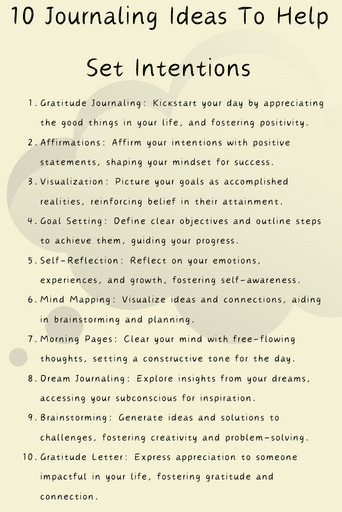
1. Gratitude Journaling: Begin Your Day with Appreciation
Gratitude journaling is the simple practice of writing down the things you are thankful for each day, whether they are big or small. Starting your morning by noticing the good in your life can help shift your mindset toward positivity.
When you regularly acknowledge the blessings around you, it becomes easier to appreciate the present moment. Over time, this practice can improve your overall well-being and support a more mindful approach to setting your intentions.
2. Affirmations For Intention Setting
Set Your Intentions with positive statements, shaping your mindset for success. Affirmations are positive statements you write down to affirm your Intentions and beliefs. Afterwards, repeating these affirmations regularly can reprogram your subconscious mind. In retrospect, you align with your goals and desires. Affirmations help to shift your mindset from self-doubt to self-belief, empowering you to take action to manifest your intentions.
3. Visualization: Picture your goals as accomplished.
Visualization is the practice of using your imagination to picture your goals as if they have already been achieved. By creating clear mental images of what you hope to accomplish, you begin to strengthen your belief that those outcomes are possible.
When you regularly visualize your goals, it can increase your motivation, sharpen your focus, and build confidence in the steps you need to take. Over time, this simple practice can help align your thoughts and actions with the intentions you are working toward.
4. Goal Setting: Define Clear Objectives and Outline Steps to Achieve
Goal setting involves defining clear objectives and outlining the steps needed to achieve them. It means identifying what you want to accomplish, breaking it down into manageable actions, and creating a path that helps you move forward with purpose.
When your goals are clear, it becomes easier to stay focused and motivated while working toward your intentions.
When I write my goals down, it makes them feel more real and easier to follow through on.
5. Self-Reflection: Reflect on Your Emotions, Experiences, and Growth.
Self-reflection is the practice of taking time to examine your thoughts, emotions, and experiences. It involves looking inward and becoming more aware of your motivations, behaviours, and patterns of thinking.
Through self-reflection, you can connect more deeply with yourself, recognize areas for growth, and make choices that align with your values and intentions. Over time, this simple practice can support greater self-awareness and meaningful personal development.
I often find that writing things down helps me see situations more clearly and understand how I really feel about them.
6. Mind Mapping: Visualize Ideas and Connections
Visualizing ideas and connections can help you brainstorm and plan more clearly. One helpful method is mind mapping, a visual technique that organizes your thoughts around a central idea.
In a mind map, a main concept sits at the center of the page while related ideas branch outward like a tree. This allows you to see connections between thoughts, explore possibilities, and clarify your intentions.
Mind mapping is both creative and flexible, making it a helpful way to explore your goals and develop strategies for moving forward. I’ve been using mind maps for as long as I can remember. I think I first started doing them back in secondary school, and they have remained a useful way for me to organize ideas and see connections more clearly.
7. Morning Pages: Clear Your Mind
Clear your mind each morning by allowing your thoughts to flow freely onto the page. This practice, often called Morning Pages, involves writing three pages of unfiltered, stream-of-consciousness thoughts first thing in the morning.
Morning Pages act as a simple “brain dump,” helping clear mental clutter and create a calm, focused start to the day. Over time, this practice can spark creativity, reveal insights from your subconscious mind, and bring greater clarity to your intentions.
I find this to be a helpful practice when I have a lot on my mind, because it allows me to feel clearer and more focused as the day begins.
8. Dream Journaling
Dream journaling is a practice that allows you to explore insights from your dreams while connecting with your subconscious mind. By recording your dreams immediately after waking, you can capture details and imagery that might otherwise fade from memory.
I often keep a notebook beside my bed and write down anything I remember as soon as I wake up. Even small fragments of dreams can reveal interesting patterns over time.
As you revisit your dreams, you may begin to notice symbols, emotions, and recurring themes. Over time, dream journaling can reveal hidden fears or desires and help you tap into your intuition for personal growth and self-discovery.
9. Brainstorming and Generating Ideas
Brainstorming is a creative way to generate ideas and solve problems. It encourages free-flowing thinking without judgment or criticism. This technique helps you explore different perspectives and discover innovative solutions. By brainstorming, you can spark creativity and uncover new possibilities for achieving your intentions. It’s a simple yet effective tool to work toward your goals.
10. Gratitude Letter To Help Set Intentions
Express appreciation to someone impactful in your life, fostering gratitude and connection. A gratitude letter is a heartfelt expression of thanks to someone who has positively influenced you. In the letter, you acknowledge their kindness, support, or impact. Writing a gratitude letter allows you to reflect on the blessings and relationships in your life. There is nothing better than sending out feelings of gratitude. It’s a meaningful way to show appreciation, strengthen relationships, and uplift your spirits.
Incorporating these journaling practices into your routine can help you clarify your intentions and support meaningful personal growth.
Journaling allows you to explore your thoughts, recognize patterns, and reconnect with what truly matters in your life. Over time, these small moments of reflection can guide you toward the life you want to create.
If you enjoy setting intentions and reflecting on your goals, you may also like using my Intention Calendar, a simple tool designed to help you pause, reset, and choose what matters most each month.